Weight Regain After Gastric Sleeve: Causes and Treatment Options
Why does weight regain happen after gastric sleeve surgery? Learn about causes, nutrition, medications, and when bariatric revision may help.
Why can weight return after gastric sleeve surgery? Learn about common causes, the importance of a complete evaluation, and medical and surgical options that may help.
Educational article · Dr. Sergio Quiñones Metabolic Surgery Center
Important: Weight regain is complex and treatable. This guide is educational and does not replace a personalized assessment by a qualified healthcare professional.
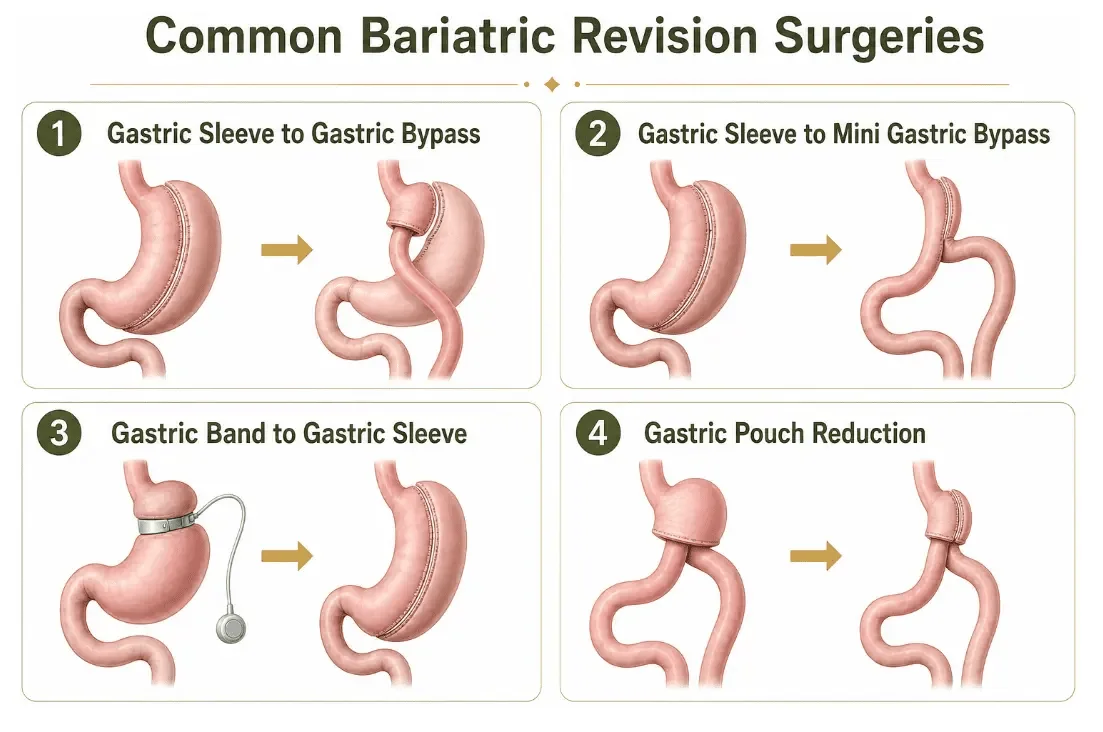
*Conceptual medical illustration. Anatomy, stomach capacity, and weight outcomes vary; stomach stretching is not the sole cause of weight recurrence.*
What is weight regain after gastric sleeve surgery?
Gastric sleeve surgery (sleeve gastrectomy) reduces the size of the stomach and can produce substantial, lasting weight loss. However, weight is not always a straight downward line. After reaching a lower weight, some patients experience a gradual increase over months or years.
There is no single universally accepted definition of clinically important weight recurrence. Your team may look at changes from your lowest postoperative weight, health conditions, weight trends, and how the change affects your well-being. A small fluctuation is not the same as a sustained, concerning increase.
Important: Weight regain is a recognized challenge after bariatric surgery—not proof of a lack of willpower or an automatic sign that surgery has failed. It deserves a thoughtful, individualized evaluation [1,2].
Why can weight regain happen?
Weight regulation is complex. Several factors may contribute at the same time, and the underlying cause can differ from person to person.
Biological changes
Changes in appetite signals, energy expenditure, and the body's response to weight loss can make weight maintenance more difficult over time.
Eating and activity patterns
Frequent grazing, calorie-containing drinks, reduced physical activity, disrupted sleep, and stressful life circumstances may contribute.
Medical or medication factors
Certain medications, untreated sleep problems, and some medical conditions may influence weight. A clinician can review these possibilities.
Anatomical factors
Changes in sleeve anatomy or capacity may play a role in selected patients, but stomach stretching alone should not be assumed to explain regain.
These factors often overlap. The goal of an assessment is to identify treatable contributors rather than assign blame [1–3].
When should you request a follow-up?
Consider reaching out to your bariatric team if your weight is steadily increasing, you feel unusually hungry, your eating capacity has changed significantly, or obesity-related conditions such as diabetes or sleep apnea are returning. Reflux, repeated vomiting, difficulty swallowing, or abdominal pain should also be evaluated.
You do not need to wait until you have regained a particular number of pounds before asking for support.
How is weight regain evaluated after gastric sleeve?
A comprehensive review may include your surgery date and records, weight trajectory, nutrition, physical activity, sleep, medications, and changes in health or mood. Your team may also assess protein intake, hydration, vitamin supplementation, and recommended laboratory testing.
- Weight history: starting weight, lowest weight after surgery, and recent trends.
- Nutrition review: meal patterns, grazing, beverages, hunger, and satiety.
- Medical review: medications, associated health conditions, and appropriate lab tests.
- Anatomical testing: upper endoscopy or imaging when symptoms or clinical findings suggest a structural concern.
Not every patient needs endoscopy or imaging. Tests are selected based on individual circumstances.
Treatment options for weight regain after gastric sleeve
1. Personalized nutrition and behavioral support
Working with a bariatric dietitian can help patients reestablish sustainable meal structure, adequate protein intake, mindful eating, and hydration. Behavioral support may address stress, emotional eating, or loss-of-control eating without judgment.
2. Physical activity and strength training
Gradually increasing movement and resistance exercise can support fitness and preservation of muscle mass. Activity plans should reflect your medical history and physical abilities.
3. Anti-obesity medications
For some patients, prescription weight-management medications—including GLP-1-based treatments—may be considered after surgery. Suitability depends on medical history, current medications, access, contraindications, and clinical monitoring. These medicines are not appropriate for everyone, and they should be prescribed by a qualified clinician [3].
4. Endoscopic or surgical options
Selected patients may benefit from an endoscopic procedure or revisional bariatric surgery after appropriate evaluation. These options involve additional risks and are not automatically the next step for everyone who regains weight [2].
When might revision surgery be considered?
Revision surgery may be discussed when there is substantial, persistent weight recurrence, inadequate weight loss, troublesome reflux, or a clinically significant anatomical problem—especially when less invasive approaches have not provided sufficient benefit.
Depending on anatomy and medical history, conversion from sleeve gastrectomy to Roux-en-Y gastric bypass or another revisional procedure may be considered. The best option depends on the reason for revision, nutritional risks, reflux symptoms, and individual surgical risk.
| Approach | When it may be useful | Key consideration |
|---|---|---|
| Nutrition and behavioral care | Changes in meal patterns, activity, or eating behaviors | Foundational support for most patients |
| Prescription weight-management medication | Persistent hunger or weight recurrence in eligible patients | Requires individualized prescribing and follow-up |
| Endoscopic evaluation or treatment | Selected anatomical or treatment-related concerns | Availability and suitability vary |
| Revisional bariatric surgery | Selected patients with substantial recurrence, reflux, or anatomical problems | Additional surgical and nutritional risks |
Revisional surgery should follow shared decision-making with an experienced bariatric surgical team [2].
Practical steps for long-term weight management
- Keep regular appointments with your bariatric team, even years after surgery.
- Follow your individualized protein, hydration, and vitamin recommendations.
- Notice gradual weight trends without overreacting to daily fluctuations.
- Maintain physical activity that is safe and sustainable for you.
- Seek help early if hunger, reflux, or weight patterns change.
- Ask about nutritional labs and other long-term monitoring recommended for your procedure.
Long-term follow-up is a central part of bariatric care, not a sign that something has gone wrong [1].
Frequently asked questions
Can you regain weight after gastric sleeve surgery?
Yes. Some patients regain weight after reaching their lowest postoperative weight. The amount and timing vary, and multiple factors can contribute.
Does weight regain mean my stomach stretched?
Not necessarily. Sleeve anatomy can change, but regain is multifactorial. Your clinician can determine whether anatomical testing is appropriate.
Can GLP-1 medications help after gastric sleeve?
They may help selected patients manage recurrent weight gain, but the decision depends on medical eligibility, risks, availability, and ongoing follow-up.
Will I need a second surgery?
Most people with some regain do not automatically need revision. The decision depends on the amount and cause of regain, symptoms, previous treatments, and surgical risk.
Can gastric bypass help after gastric sleeve?
Conversion to gastric bypass may be an option for selected patients, particularly when significant GERD is also present. It is not a guaranteed solution and requires specialist evaluation.
When should I contact my bariatric team?
Contact your team when weight regain is sustained or concerning, or if reflux, vomiting, swallowing problems, or obesity-related conditions return.
Medical references
- American Society for Metabolic and Bariatric Surgery (ASMBS). *Life After Bariatric Surgery.* Patient education and lifelong follow-up.
- Eisenberg D, et al. *ASMBS and IFSO Indications for Metabolic and Bariatric Surgery.* Surgery for Obesity and Related Diseases. 2022;18(12):1345–1356. Read the guidelines.
- National Institute of Diabetes and Digestive and Kidney Diseases (NIDDK). *Weight-loss (Bariatric) Surgery.* Read patient information.
Concerned about weight regain after gastric sleeve?
Our team can help you arrange a consultation to discuss your surgical history, current concerns, and whether further evaluation or treatment may be appropriate.
Dr. Sergio Quiñones Metabolic Surgery Center Tijuana, Mexico WhatsApp: +1 (858) 439-7931 Email: contact@pompeii-surgical.com
Medical disclaimer: This article is intended for education only. Treatment eligibility, risks, and outcomes vary. Have the medical team review the page before publication.