
Titanium Staples in Bariatric Surgery: How Safe Are They?
Learn how surgical staples work in gastric sleeve and gastric bypass surgery, why titanium is widely used, and what research says about allergies, leaks, and MRI safety.
PATIENT EDUCATION · SURGICAL SAFETY
A clear, research-informed look at the tiny implants used during gastric sleeve and gastric bypass—and what patients should know before surgery.
*Gastric sleeve · Gastric bypass · Long-term safety*
It is natural to wonder: Will the staples stay in my stomach? Can my body reject them? Could they cause a leak?
During many weight loss operations, surgeons use specialized stapling devices to seal or divide digestive tissue. Titanium and titanium-alloy staples are widely used because of their strength and compatibility with human tissue. They have an established role in surgery, but no surgical device is entirely risk-free. [1, 2]
THE BASICS
What are titanium surgical staples?
Internal surgical staples are very small metal fasteners placed by a surgical stapling instrument. Unlike removable skin staples, these staples are intended to remain inside the body. The instrument compresses tissue and forms rows of staples; some staplers also cut between the rows to separate tissue while maintaining a sealed edge. Actual staple material and device specifications vary by manufacturer. [1]
◈ Biocompatible
Titanium is generally well tolerated by the body, although rare hypersensitivity reactions have been reported. [3]
⌁ Durable
Medical titanium provides strength and corrosion resistance for long-term implantation.
✦ Made to remain
Internal staples do not normally dissolve or require routine surgical removal.
WHERE THEY ARE USED
How staples help in bariatric surgery
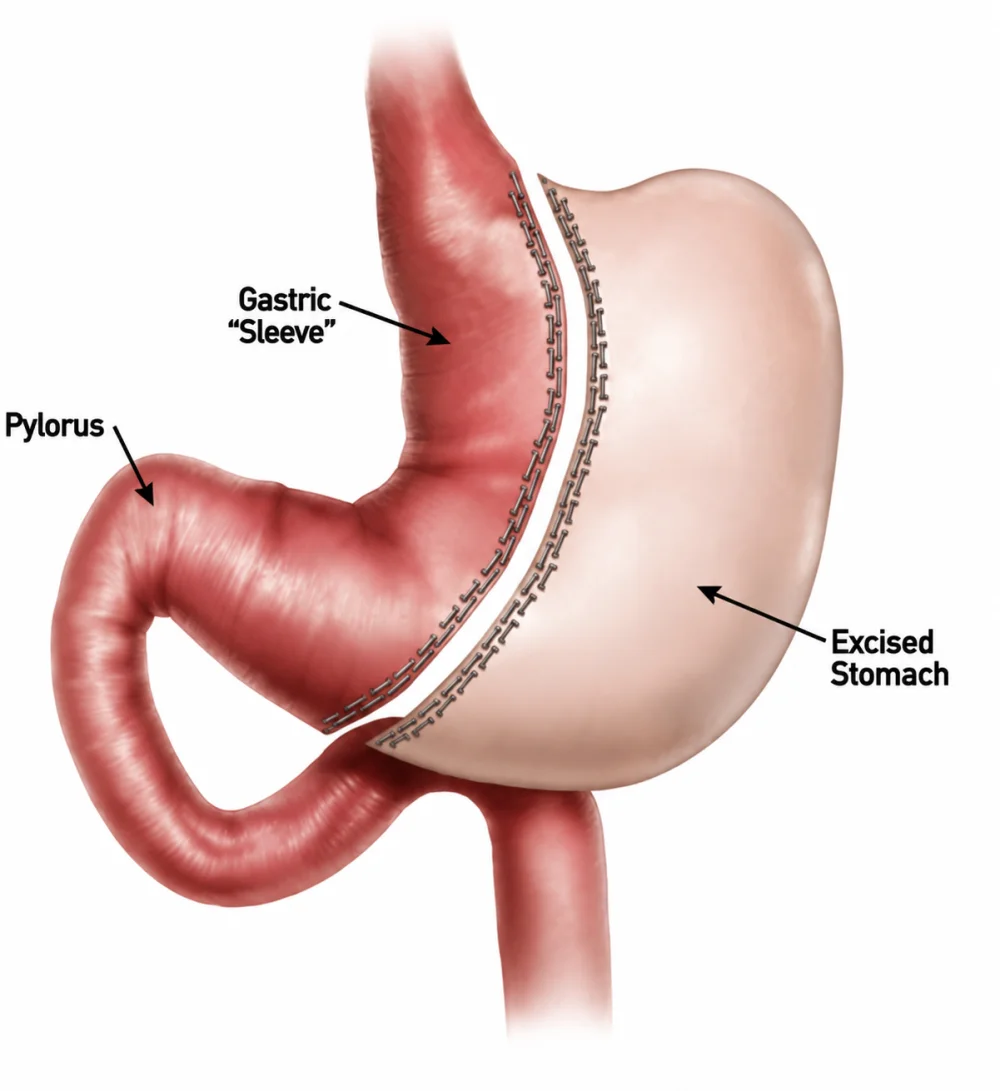
*Educational illustration · not to scale*
PROCEDURE 01
Gastric sleeve
During sleeve gastrectomy, approximately 80% of the stomach is removed. The remaining stomach forms a narrow tube, with a staple line running along its edge. The staples help hold tissue together as healing takes place. [2]
What patients should know: The staple line is designed for tissue closure, while the body develops a healed tissue seal over time.
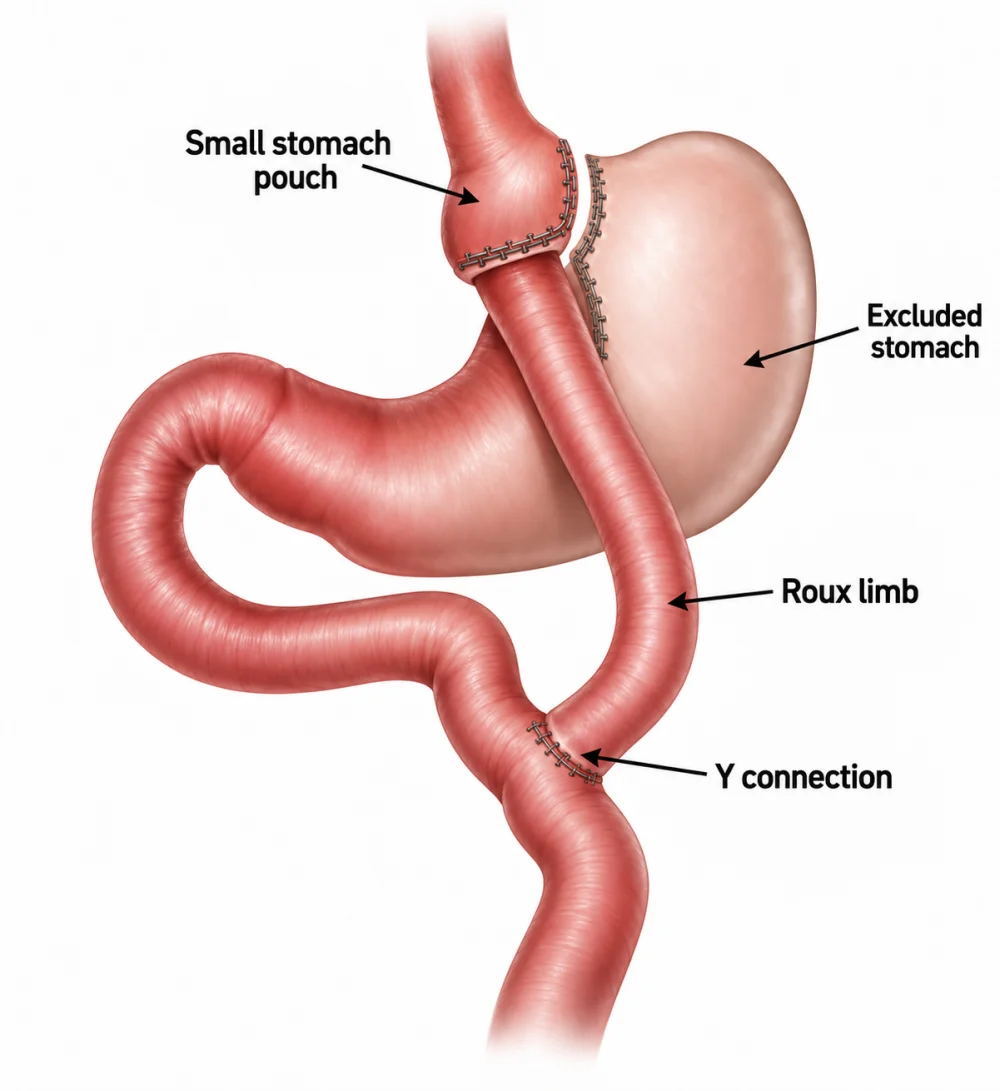
*Educational illustration · not to scale*
PROCEDURE 02
Gastric bypass
During Roux-en-Y gastric bypass, staplers help create a small stomach pouch and divide digestive tissue. Staples or sutures may also be used to construct tissue connections as part of the operation. [2]
Important: Technique and device selection are determined by the operating surgeon and the patient's anatomy.
COMMON CONCERNS
Four questions patients frequently ask
1. Do the staples stay forever?
Usually, yes. Internal surgical staples are designed to stay in place permanently. They do not normally dissolve, and weight loss does not routinely cause properly formed staples to loosen.
2. Can titanium cause an allergy?
Clinically significant titanium hypersensitivity appears uncommon, but cases have been reported. Tell your team about prior reactions to metals or implants. A symptom alone does not establish a titanium allergy. [3]
3. Can I get an MRI?
Many titanium staple implants are MRI-compatible under specified conditions. The radiology team must verify the exact device and its MRI labeling; never assume all implants have identical conditions. [6]
4. Can the staples cause long-term problems?
Most remain without needing attention. However, pain, vomiting, swallowing difficulty, bleeding, or other persistent symptoms after bariatric surgery warrant medical assessment; they should not automatically be blamed on the metal.
UNDERSTANDING SURGICAL RISK
What about staple-line leaks?
A gastrointestinal leak occurs when stomach or intestinal contents escape from a surgical closure. Although the name includes “staple line,” a leak does not necessarily mean that the titanium metal failed or that the body rejected it. Tissue blood supply, pressure, healing, staple formation, and patient factors can all contribute. The American Society for Metabolic and Bariatric Surgery describes both mechanical/tissue and blood-supply-related causes. [4]
REPORTED RANGE · SLEEVE GASTRECTOMY 0.17%–0.5% Approximate staple-line leak rates reported in one clinical review. Figures vary by study and patient population; this is not a complication rate for our center. [5]
Seek urgent medical care: A persistent rapid heartbeat, fever, worsening abdominal pain, difficulty breathing, or inability to tolerate liquids after surgery can be signs of a serious complication and should be assessed promptly.
The FDA also reports that surgical stapler misuse or malfunction can lead to bleeding, tissue injury, or leaks. Proper device choice, surgeon training, appropriate staple formation, and careful postoperative monitoring are essential. [1]
THE BIGGER PICTURE
Patient safety goes beyond the staples
Safe surgery is not defined by a single material. It depends on patient selection, preoperative evaluation, surgical technique, device choice, tissue handling, follow-up, and timely recognition of complications.
The bottom line
Titanium surgical staples are generally well tolerated and have an established role in modern bariatric surgery. They are typically designed to remain in place without routine removal. Rare hypersensitivity and stapling-related complications are possible, so patients should discuss their individual medical history and questions with their surgeon.
At Dr. Sergio Quiñones Metabolic Surgery Center, we believe that clear patient education is an important part of informed surgical decision-making.
EVIDENCE-BASED EDUCATION
Medical References
- U.S. Food and Drug Administration (FDA). Surgical Staplers and Staples — Safety information and reported complications.
- American Society for Metabolic and Bariatric Surgery (ASMBS). Bariatric Surgery Procedures — Description of sleeve gastrectomy and gastric bypass.
- Wood MM et al. (2015). Hypersensitivity Reactions to Titanium: Diagnosis and Management — Review of implant-related titanium hypersensitivity.
- ASMBS (2015). Position Statement on Prevention, Detection, and Treatment of Gastrointestinal Leak After Gastric Bypass and Sleeve Gastrectomy.
- NCBI Bookshelf. Surgical Options in the Treatment of Severe Obesity — Review of surgical complications and reported leak rates.
- NCBI Bookshelf. Magnetic Resonance Imaging (MRI) Safety and Biological Effects — Implant MRI safety considerations.
*Anatomical graphics are simplified original diagrams for patient education, not diagnostic imagery. General medical information, not a representation of devices used in a specific surgery.*
Questions About Weight Loss Surgery?
Dr. Sergio Quiñones Metabolic Surgery Center · Zona Río, Tijuana, Mexico
WhatsApp: +1 (858) 439-7931 Email: contact@pompeii-surgical.com