
The Power of Protein After Weight Loss Surgery
Learn why protein matters after gastric sleeve or bypass surgery, how much you may need, and which foods support recovery.
BARIATRIC NUTRITION · RECOVERY & LONG-TERM HEALTH
Discover how protein supports healing, protects your muscles, and helps you build healthy habits after gastric sleeve, gastric bypass, or revision surgery.
After weight loss surgery, your portions become smaller, but your body still needs important nutrients. Protein is one of the foundations of recovery. At Dr. Sergio Quiñones Metabolic Surgery Center, we encourage patients to understand their protein goals and follow their personalized nutrition plan.
GUIDE 01
Why protein matters

Protein supplies amino acids used to repair tissues, support immune function, and preserve lean muscle during rapid weight loss. After surgery, smaller meals make protein-rich choices especially important.
GUIDE 02
Five important benefits

Healing
Helps rebuild tissues after surgery.
Muscle
Helps limit loss of lean mass during weight reduction.
Fullness
Protein-rich solid foods can keep you satisfied longer.
Hair and skin
Supplies building blocks for normal tissue maintenance; hair shedding can still occur after rapid weight loss.
Long-term habits
Prioritizing protein helps make small meals nutritionally valuable.
GUIDE 03
How much protein should you aim for?

Many bariatric guidelines recommend at least 60 grams per day, with individualized targets sometimes higher depending on ideal body weight, procedure, and clinical needs. Your nutritionist may recommend approximately 60–80 grams daily or a different goal. Spread protein across meals and approved snacks.
GUIDE 04
Protein-rich foods to choose

Animal sources
Eggs, fish, poultry, lean meat, Greek yogurt, and cottage cheese.
Plant sources
Tofu, soy foods, beans, and lentils.
Supplements
Approved whey or soy protein drinks may help during early recovery. Check serving sizes and nutrition labels.
GUIDE 05
Protein through your recovery stages
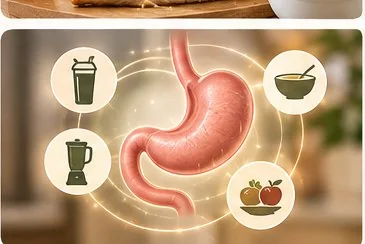
- Clear liquids: prioritize hydration and only approved clear protein products.
- Full liquids: approved protein drinks can help meet needs.
- Purées: introduce smooth protein foods as directed.
- Soft foods: advance to tender, easy-to-chew proteins.
- Regular foods: choose protein first and build balanced meals.
GUIDE 06
Signs you may need extra nutritional support

Consistently inadequate protein may contribute to weakness, loss of muscle, poor wound healing, and nutritional complications. Persistent vomiting, inability to tolerate fluids, or trouble meeting nutritional goals should be reported promptly.
GUIDE 07
Simple habits that make a difference

Choose protein first once on solid foods; divide your daily goal across meals; track intake; keep an approved supplement available; chew slowly; stay hydrated between meals as instructed; and attend nutritional follow-ups.
EVIDENCE-BASED EDUCATION
References
- Obesity Medicine Association. *Bariatric nutrition and evaluation of the metabolic surgical patient: Update to the 2022 OMA Clinical Practice Statement.* Published online 2024; indexed 2025. Read the publication.
- Kim TY, Kim S, Schafer AL. *Medical Management of the Post Operative Bariatric Surgery Patient.* Endotext. Last updated August 6, 2025. Read the publication.
- Shetye B, Hamilton FR, Bays HE. *Bariatric surgery, gastrointestinal hormones, and the microbiome: OMA Clinical Practice Statement 2022.* Published April 1, 2022. Read the publication.
*Publication dates refer to the medical sources, not this blog post. This educational article does not replace individualized advice from your surgeon or registered dietitian.*