Acid Reflux Before and After Weight Loss Surgery: What Patients Should Know
Learn why GERD can occur before or after gastric sleeve surgery, how gastric bypass affects reflux, and when bariatric revision may be considered.
Can weight loss surgery improve heartburn—or make it worse? Learn how GERD relates to obesity, gastric sleeve surgery, gastric bypass, and revision treatment.
Important: This article is for educational purposes and is not a substitute for individualized medical advice. Persistent reflux, swallowing difficulties, or new symptoms after surgery deserve medical evaluation.
*Illustrative depiction of acid reflux and symptom improvement. Individual treatment outcomes vary.*
What is acid reflux (GERD)?
Acid reflux happens when stomach contents flow backward into the esophagus. Frequent or troublesome reflux may be diagnosed as gastroesophageal reflux disease (GERD). Symptoms include heartburn, sour-tasting regurgitation, chest discomfort, throat irritation, and sometimes difficulty swallowing.
Untreated GERD can cause esophageal inflammation and, in some patients, complications such as strictures or Barrett’s esophagus. Chest pain should not automatically be assumed to be reflux.
Why can reflux occur before bariatric surgery?
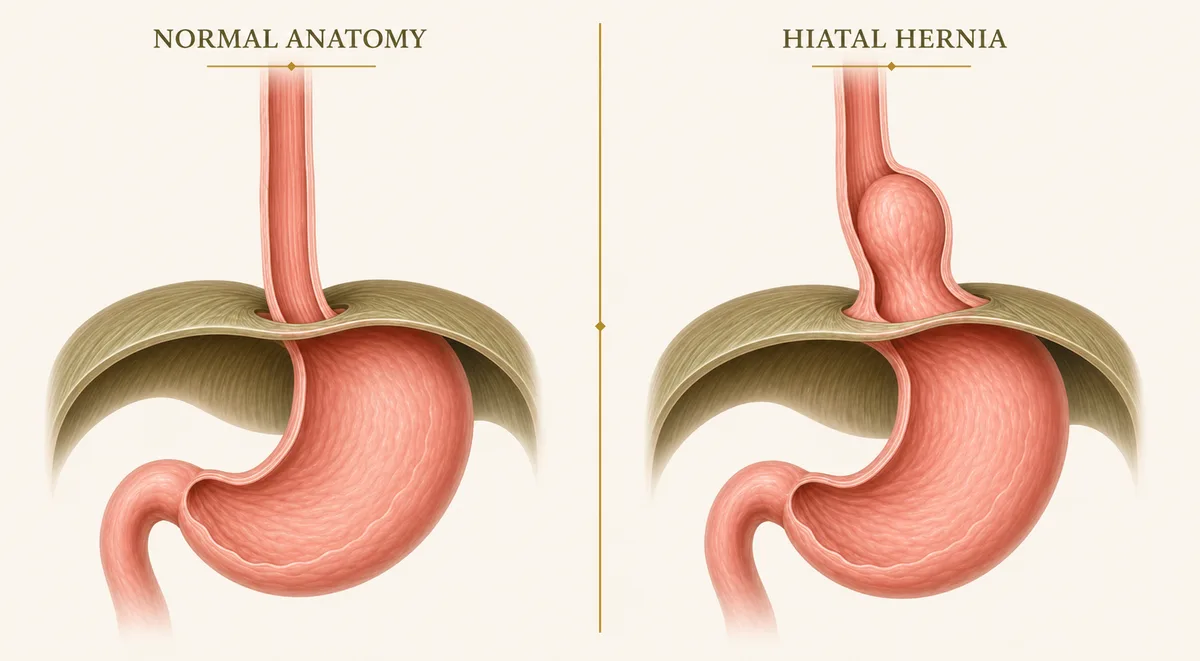
Obesity is associated with GERD partly because increased abdominal pressure can encourage stomach contents to move upward. A hiatal hernia may also weaken the normal barrier between the stomach and esophagus. The American College of Gastroenterology recommends weight loss for patients with overweight or obesity who have GERD symptoms [1].
- Higher pressure within the abdomen
- Hiatal hernia or changes in the anti-reflux barrier
- Large meals, late meals, or individual food triggers
- Other factors affecting esophageal movement or stomach emptying
Acid reflux after gastric sleeve surgery
During sleeve gastrectomy, much of the stomach is removed to create a narrow, tube-shaped stomach. While many people experience important weight-loss benefits, some develop new or worsening GERD afterward.
Potential reasons include increased pressure inside the sleeve, changes near the junction of the stomach and esophagus, a hiatal hernia, or sleeve narrowing or twisting. Not everyone develops reflux: symptoms may improve with weight loss in some patients but persist or worsen in others [2].
Gastric sleeve vs. gastric bypass for reflux
Gastric sleeve
Reduces stomach size without rerouting the intestines. Reflux can improve, remain unchanged, or worsen; significant pre-existing GERD deserves careful assessment.
Roux-en-Y gastric bypass
Creates a small stomach pouch and reroutes part of the small intestine. Often improves GERD and may be considered for selected patients with obesity and troublesome reflux.
| Consideration | Gastric sleeve | Roux-en-Y bypass |
|---|---|---|
| Intestinal rerouting | No | Yes |
| Effect on reflux | May improve or worsen | Often improves |
| For significant pre-existing GERD | Requires careful evaluation | Often considered |
| Revision option for refractory GERD after sleeve | Not typically | May be appropriate |
Bypass does not guarantee complete relief of GERD, and both operations have distinct risks and long-term nutritional responsibilities [1,2].
What if acid reflux begins years after gastric sleeve?
Reflux can develop months or years after surgery. Frequent heartburn, nighttime regurgitation, vomiting, or trouble swallowing warrants assessment rather than simply increasing medication on your own.
How doctors investigate persistent reflux
- Upper endoscopy (EGD): checks for esophagitis, ulcers, Barrett’s esophagus, and anatomy-related concerns.
- Upper GI contrast study: may help evaluate sleeve shape and narrowing.
- Esophageal pH testing: measures acid exposure.
- Manometry: assesses esophageal muscle function when indicated.
Testing is tailored to each patient's symptoms and medical history.
Treatment options for GERD after weight loss surgery
Dietary and lifestyle changes
Smaller meals, avoiding lying down for two to three hours after eating, identifying personal food triggers, and elevating the head of the bed for nighttime symptoms may help.
Acid-reducing medications
Proton pump inhibitors (PPIs), such as omeprazole or pantoprazole, can reduce acid and help heal esophagitis. A clinician should guide medication selection and duration.
Hiatal hernia repair
When a hiatal hernia contributes to symptoms, repair may be considered depending on the anatomy and clinical findings.
Revision from gastric sleeve to gastric bypass
For selected patients whose GERD persists despite appropriate medical treatment, conversion to Roux-en-Y gastric bypass may be considered. SAGES guidance recommends initial medical management and individualized decisions about surgery, particularly based on BMI and clinical findings [2].
Frequently asked questions
Is heartburn normal after gastric sleeve?
Reflux is a recognized possible complication, but persistent or severe symptoms should be assessed rather than accepted as normal.
Can weight loss make reflux go away?
Weight loss can improve reflux for some patients, but anatomical causes after surgery may still require treatment.
Can I have a gastric sleeve if I already have GERD?
Possibly, depending on reflux severity, test results, and individual risks. Significant GERD may make bypass a more suitable option.
Can gastric bypass cure reflux?
Many patients improve, but complete and permanent relief cannot be guaranteed.
When should I seek urgent care?
Seek urgent medical evaluation for vomiting blood, black stools, inability to swallow liquids, or severe abdominal pain. Chest pain with shortness of breath, sweating, or pain radiating to the arm or jaw requires emergency assessment.
Medical references
- Katz PO, et al. *ACG Clinical Guideline: Diagnosis and Management of Gastroesophageal Reflux Disease.* American Journal of Gastroenterology. 2022;117(1):27–56. Read the guideline.
- *SAGES Guidelines for the Management of Comorbidities Relevant to Metabolic and Bariatric Surgery.* Surgical Endoscopy. 2024. Read the guideline.
- Society of American Gastrointestinal and Endoscopic Surgeons. *Multi-Society Consensus Conference and Guideline on the Treatment of GERD.* Read the guidance.
Experiencing reflux after gastric sleeve surgery?
Our team in Tijuana, Mexico can help you arrange an individualized consultation to discuss symptoms, prior surgical history, and whether additional evaluation or revision surgery may be appropriate.
Dr. Sergio Quiñones Metabolic Surgery Center WhatsApp: +1 (858) 439-7931 Email: contact@pompeii-surgical.com
Medical disclaimer: This content is informational and does not replace professional medical diagnosis or treatment. Procedure suitability and outcomes vary. This page should be reviewed by the center's medical team before publication.